Have you ever wondered why September from “septem” in Latin means seven but is actually the ninth month? They actually come from the ancient Roman calendar, which initially started from March and had only 10 months. It had 304 days with 61 days unaccounted for.
Calendar of Romulus:
1.
Martius - 31 Days: Month of Mars, the god of war
2.
Aprilis - 30 Days: Month of Aphrodite, the Greek goddess of love and beauty.
3.
Maius - 31 Days: Month of Maia. Maia is one of the Pleiades. They are the companions of Artemis in Greek mythology.
4.
Iunius - 30 Days: Month of Juno an ancient Roman goddess who is the protector of the state.
5.
Quintilis - 31 Days
6.
Sextilis - 30 Days
7.
September - 30 Days
8.
October - 31 Days
9.
November - 30 Days
10.
December - 30 Days
We may wonder, what is going on between December and March that is like 50 days. Those days are the unnamed stretch of time “Winter”.
The Romans numbered the days of the month by putting place markers around the Calends (the beginning of the month), the Nones (the 5th or 7th day), and the Ides (the 15th day of March, May, July, and October and the 13th day of other months). Ides of March is the day on which Julius Caesar was assassinated. Each day was referred to how many days it fell before the Calends, the Nones, or the Ides. For example, May 11 would be referred as “5 Ides” because it is 4 days before May 15, the Ides of May.
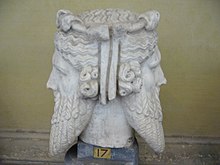
But this calendar had a problem- it did not align with the seasons. King Pompilius added January (Month of Janus the god of gates) and February (Month of Februa, the feast of purification). They had the intercalary month which is the extra month added to make up for the days or months needed to keep the calendar aligned with the seasons.
(January was named after Janus, the god of doors, because he was also the god of beginnings, and January is the beginning of the year.)
The intercalary month was removed by Julius Caesar when he became the pontifex maximum (the head priest) who has the authority to change the calendar.

After Caesar’s assassination, Mark Antony renamed Quintilis as July after Caesar.
Augustus renamed Sextilis as August after him. The emperors who followed Augustus tried to rename the months after them but it did not succeed.
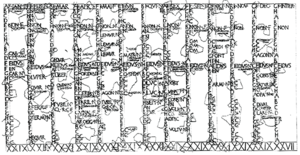
This is the fragment of an ancient Roman calendar. Calends are marked as C, Nones are marked as NON and Ides are marked as EID in the Roman calendar.

“Ides of March” Ancient Roman coin
Resources:
https://en.wikipedia.org/wiki/Ides_of_March
https://en.wikipedia.org/wiki/Roman_calendar

The author states that smartphones are vampires of the 21st century. While it is true that some people are addicted to their screens and need to be weaned off, doing away with smartphones altogether is neither desirable nor feasible. Non-screen devices are perhaps the way of the future, but the needs of the developing world, those of higher education, and those of specialized professions are still best met by smartphones and iPads.
First, the developing world still needs smartphones. Farmers can use them to find out about weather, plant nutrition, and pest control. Small businesses can use them to reach both customers and vendors. E-payments obviate the need for widespread banking infrastructure.
Next, high school and college students need screen-based devices. Ebooks can replace printed texts, saving students from having to lug large weights around. Students can access content from anywhere, giving them the opportunity to be more productive. It opens up the new medium of hybrid learning, which shows signs of being more effective than classroom-only instruction.
Finally, visual communication cannot be completely replaced with verbal and tactile methods. Many professionals, including radiologists, artists and entertainers, cannot do without images. Line of sight communication does not disturb neighbors as auditory communication does. Further, small screens preserve privacy unlike other modes of communication.